
How Retailers and Foodservice Buyers Evaluate Frozen Food Suppliers
Why Quality Isn’t a Claim at Ziraland — It’s a Process
The frozen food category has evolved significantly over the past decade. What was once driven primarily by price and shelf life is now shaped by ingredient integrity, processing methods, regulatory compliance, and long-term supply reliability. For retailers, foodservice operators, and distributors, selecting a frozen food supplier is no longer a transactional decision—it is a strategic one.

Professional buyers increasingly assess suppliers based on how well their products perform across real-world conditions: freezer storage, baking or cooking execution, consumer expectations, and regulatory scrutiny. Categories such as frozen desserts, bourekas and puff pastries, IQF frozen herbs, and specialty frozen foods are evaluated not just for taste, but for consistency, transparency, and operational fit.
Retail buyers, in particular, are focused on how frozen products translate at shelf level. Clean ingredient lists, predictable appearance, and packaging designed for freezer environments are essential. Products must be shelf-ready, compliant with Canadian and U.S. labelling standards, and capable of maintaining quality throughout extended cold-chain distribution. As consumer demand shifts toward clean-label and culturally authentic foods, retailers increasingly prioritize suppliers offering products such as frozen baked goods, baklava, and ready-to-bake pastries that balance heritage with modern production standards.
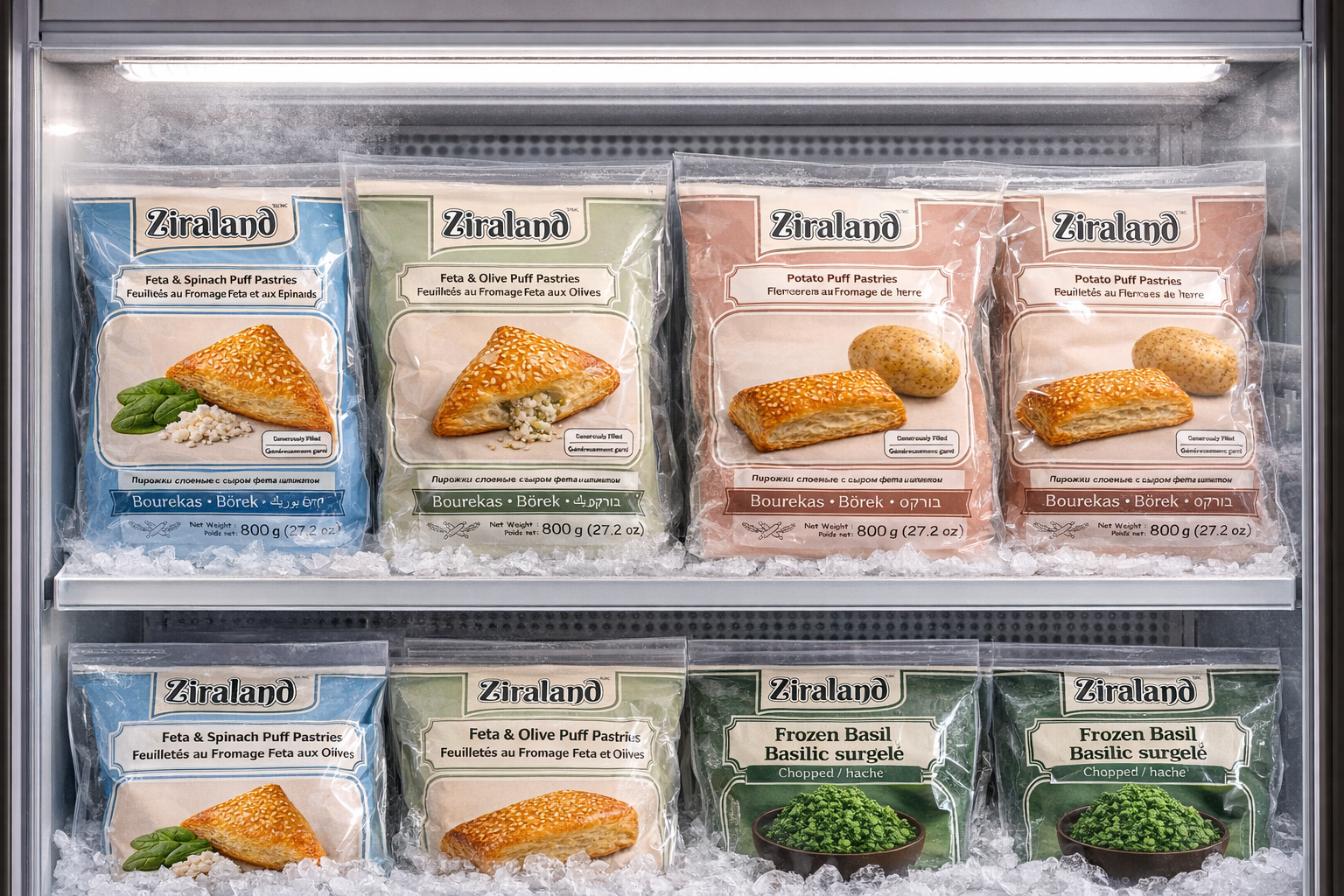
Foodservice buyers approach frozen sourcing from a different, but equally demanding, perspective. Kitchens require products that reduce labour, minimize waste, and deliver consistent results regardless of volume. Oven-ready formats, uniform portioning, and dependable baking performance are critical factors. Items such as puff pastries, savory bourekas, frozen herbs, and frozen seafood are valued not for novelty, but for their ability to integrate seamlessly into high-pressure service environments.
Ingredient quality remains one of the most decisive factors across both retail and foodservice channels. Buyers are increasingly wary of frozen foods made with fillers, processed substitutes, or artificial additives. Products built with real butter, natural cheeses, whole vegetables, nuts, and herbs consistently outperform alternatives that rely on cost-cutting formulations. This is especially true for products like feta-filled bourekas, hazelnut pastries, and layered desserts, where ingredient shortcuts are immediately apparent in both flavour and texture.
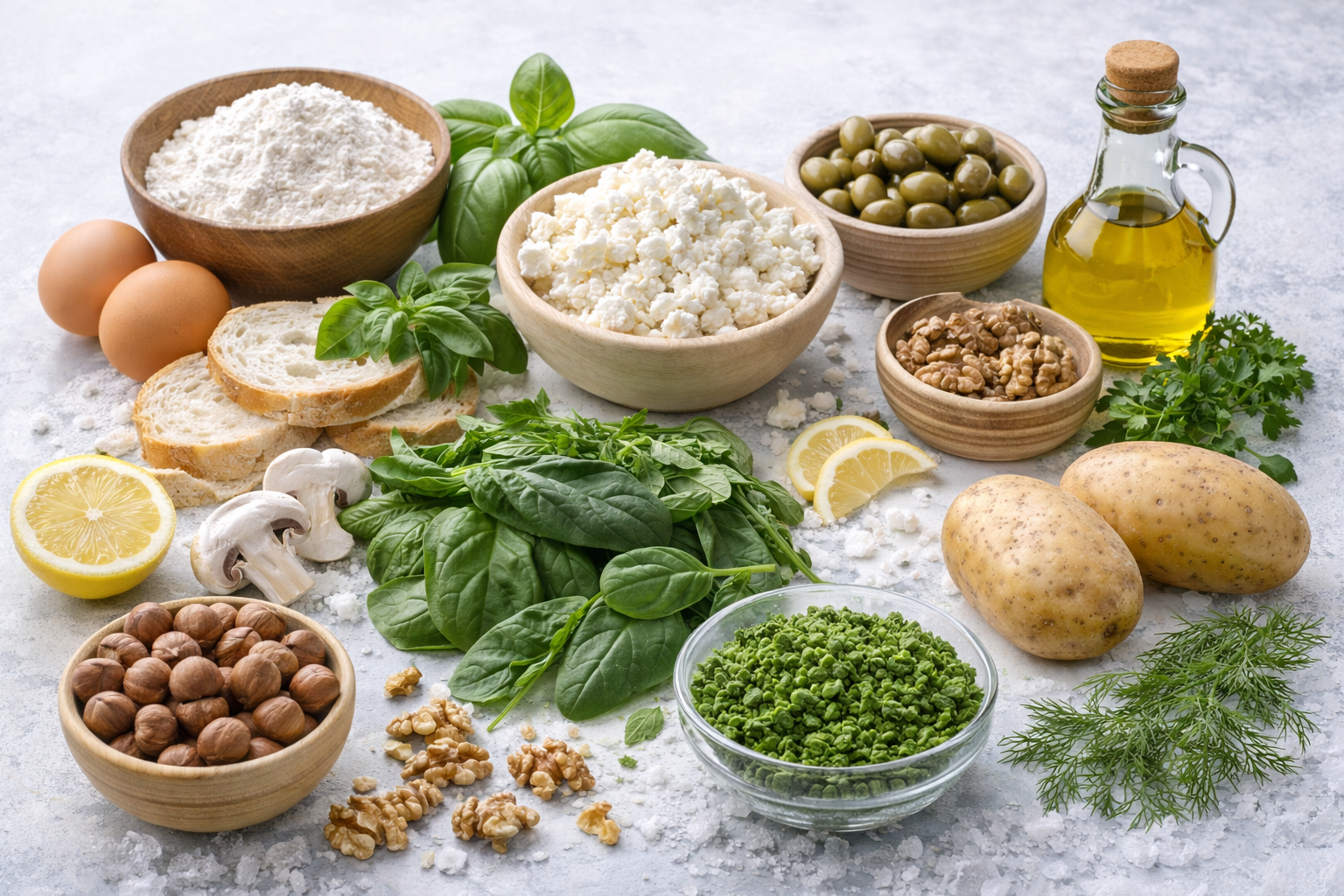
Freezing technology itself plays a critical role in preserving quality. When executed properly, freezing is not a compromise but a preservation method. IQF technology allows products such as frozen basil, frozen parsley, and frozen dill to retain colour, aroma, and usability by preventing clumping and structural damage. Similarly, rapid blast freezing stabilizes pastry layers and fillings, ensuring that baked goods emerge from the oven with the same structure and performance as freshly prepared items.
Compliance and certification are equally central to supplier evaluation. Retailers and foodservice buyers require partners that operate within established food safety frameworks, including HACCP and ISO 22000 systems. For many markets, halal and kosher certifications are not optional but essential, particularly for suppliers offering halal frozen foods and kosher frozen foods. Full traceability, documentation, and regulatory alignment across Canada and the United States are baseline expectations rather than differentiators.
Another critical consideration is the distinction between retail and foodservice formats. While the underlying product may be identical, packaging, labelling, and usage requirements differ substantially. Retail products must communicate clearly to consumers, while foodservice formats emphasize efficiency, scale, and operational control. Suppliers capable of supporting both channels with adaptable offerings—such as frozen pastries, bourekas, and prepared baked goods—are better positioned to support buyer growth.
Consistency ultimately defines supplier reliability. Buyers expect the same product, formulation, and performance across every shipment. Unexpected reformulations, inconsistent sizing, or variable quality introduce operational risk and erode trust. This is particularly important for high-volume categories such as frozen baked goods, herbs, and seafood products, where even minor deviations can disrupt service or retail performance.

As frozen food portfolios expand, buyers increasingly seek suppliers capable of long-term partnership rather than single-category fulfillment. Suppliers offering a diversified range—spanning frozen desserts, bourekas and puff pastries, IQF frozen herbs, seafood, and cold-pressed olive oil—provide scalability and resilience as market demands evolve across Canada and the United States.
In an increasingly competitive frozen food landscape, supplier selection is defined by discipline rather than novelty. Clean ingredients, proper freezing methods, regulatory compliance, and unwavering consistency remain the foundations of successful retail and foodservice sourcing. Buyers who align with suppliers built on these principles position themselves for sustainable growth and long-term confidence in the frozen aisle and beyond.


